


In today’s fast-paced business environment, companies feel constant pressure to fill positions quickly. Deadlines are tight, workloads are increasing, and every vacant role seems urgent.
So, what do most businesses do?
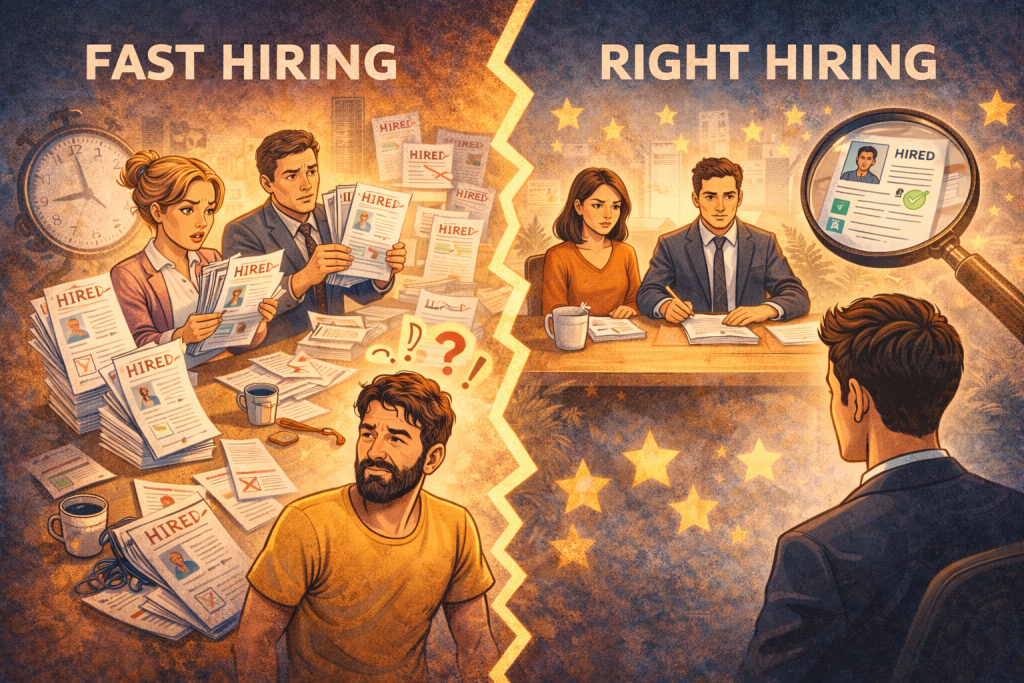
They choose fast hiring over right hiring.
At first, it feels like a smart move—get someone in quickly and keep operations running. But over time, this decision often leads to poor performance, higher costs, and repeated hiring cycles.
The truth is simple:
Hiring fast can solve today’s problem—but hiring right builds your future.
In this blog, we’ll explore the difference between fast hiring and right hiring, the risks companies often ignore, and how to build a smarter hiring strategy.
What is Fast Hiring?
Fast hiring focuses on:
- Filling positions quickly
- Reducing time-to-hire
- Prioritizing speed over evaluation
When Companies Use Fast Hiring:
- Urgent vacancies
- High workload pressure
- Business expansion
While speed is important, it often comes at the cost of quality.
What is Right Hiring?
Right hiring focuses on:
- Finding the best-fit candidate
- Evaluating skills and cultural fit
- Ensuring long-term performance
It may take slightly longer—but delivers better results.
Why Companies Choose Fast Hiring (The Common Trap)
1. Pressure to Fill Roles Quickly
Vacancies create operational gaps, pushing teams to act fast.
2. Fear of Productivity Loss
Businesses believe hiring quickly will maintain workflow.
3. Lack of Talent Pipeline
Without ready candidates, companies panic hire.
4. Poor Workforce Planning
No long-term hiring strategy leads to reactive decisions.
The Hidden Risks of Fast Hiring
1. Increased Chances of Bad Hires
Rushed decisions often lead to poor candidate selection.
2. Higher Employee Turnover
Employees who are not the right fit leave quickly.
3. Productivity Loss Instead of Gain
New hires may require more supervision and training.
4. Financial Impact
Costs include:
- Re-hiring
- Training
- Lost productivity
5. Team Disruption
A wrong hire can affect team morale and performance.
Why Right Hiring Drives Business Growth
1. Better Performance
Right candidates deliver results consistently.
2. Stronger Team Culture
Employees align better with company values.
3. Lower Attrition Rates
Good hires stay longer.
4. Long-Term Cost Savings
Fewer hiring cycles = lower costs.
How to Balance Speed and Quality in Hiring
1. Build a Talent Pipeline
Always have pre-screened candidates ready.
2. Standardize Hiring Process
- Structured interviews
- Skill assessments
- Clear evaluation criteria
3. Use Data-Driven Hiring
Track performance and hiring success rates.
4. Set Realistic Hiring Timelines
Avoid unnecessary delays—but don’t rush decisions.
5. Partner with Recruitment Experts
Working with professionals like Shriniwas Placement Consultants helps you:
- Hire faster without compromising quality
- Access pre-screened candidates
- Reduce hiring risks
Signs You’re Prioritizing Speed Over Quality
- Hiring decisions made within days
- Minimal screening process
- High employee turnover
- Frequent re-hiring
- Poor performance after hiring
These are warning signs of fast hiring mistakes.
Smart Hiring Strategy: The Best Approach
The goal is not just fast hiring or slow hiring—it’s smart hiring.
Smart hiring means:
- Efficient processes
- Quality evaluation
- Timely decisions
Balance is the key.
FAQs
Q1: What is the difference between fast hiring and right hiring?
Fast hiring focuses on speed, while right hiring focuses on selecting the best candidate for long-term success.
Q2: Is fast hiring always bad?
Not always, but without proper evaluation, it increases the risk of hiring the wrong candidate.
Q3: Why is right hiring important?
It ensures better performance, lower turnover, and long-term business growth.
Q4: How can companies hire fast without compromising quality?
By building talent pipelines, using structured hiring processes, and working with recruitment experts.
Q5: What is smart hiring?
A balanced approach that combines speed and quality for effective hiring decisions.
Conclusion
Choosing between fast hiring and right hiring is one of the biggest decisions businesses make.
While fast hiring may solve immediate problems, right hiring builds long-term success.
The smartest companies don’t choose one—they balance both.
Want to hire faster without compromising on quality?
Partner with Shriniwas Placement Consultants and build a team that drives real business growth.

